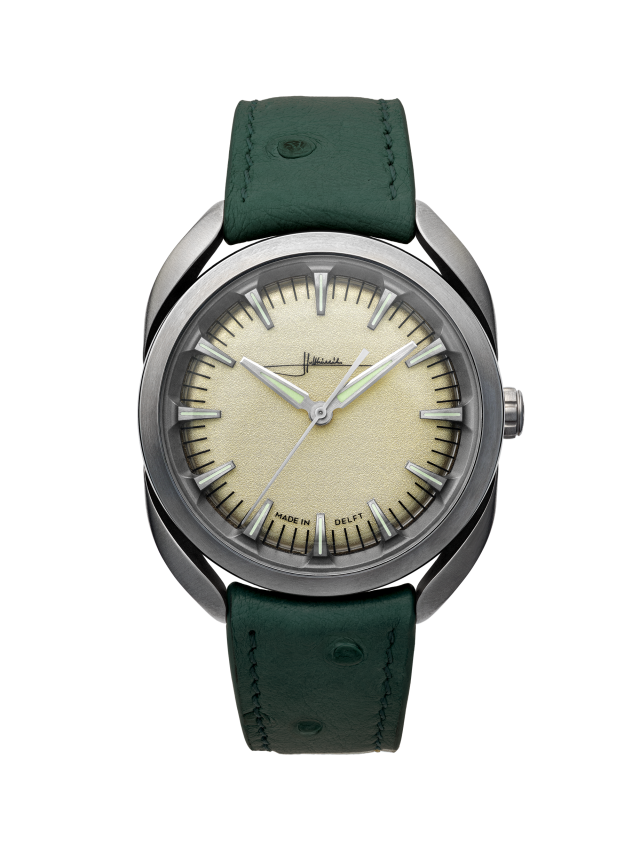
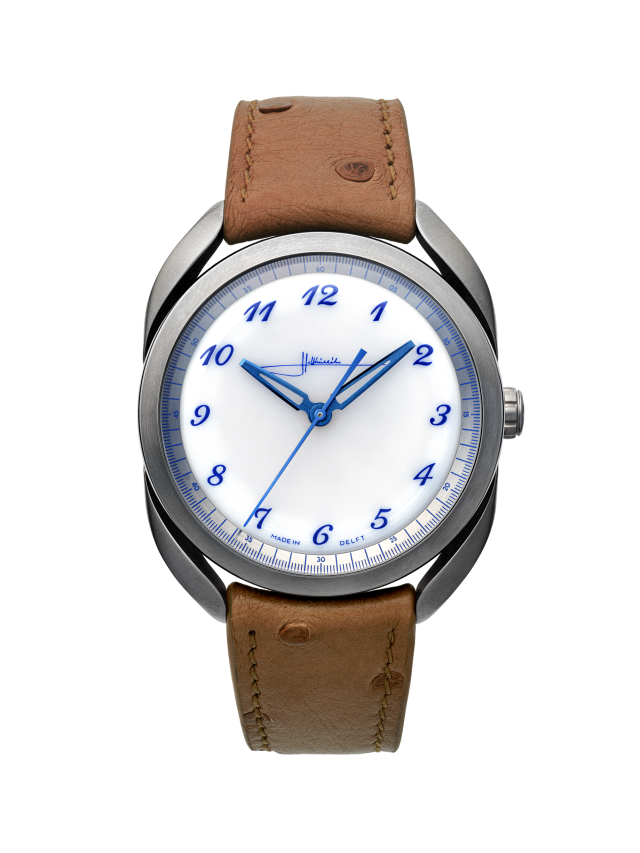
Because it allows a watch to be engineered rather than simply shaped. Traditional methods begin with a block of metal and remove material; additive manufacturing builds structure only where it is needed. This opens possibilities for lighter constructions, thinner profiles and architectural geometries that would be extremely difficult — or simply impossible — to achieve through conventional machining. It is not about replacing tradition, but about expanding what mechanical watch design can become.
Authenticity comes from intention and execution, not from a single manufacturing technique. After printing, every case undergoes extensive refinement and finishing. Surfaces are balanced, edges are perfected and proportions are evaluated by hand. The mechanical heart remains rooted in classical horology. Additive manufacturing does not remove craftsmanship — it introduces a new layer of it.
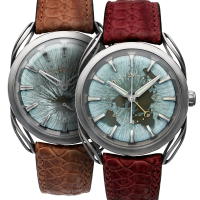
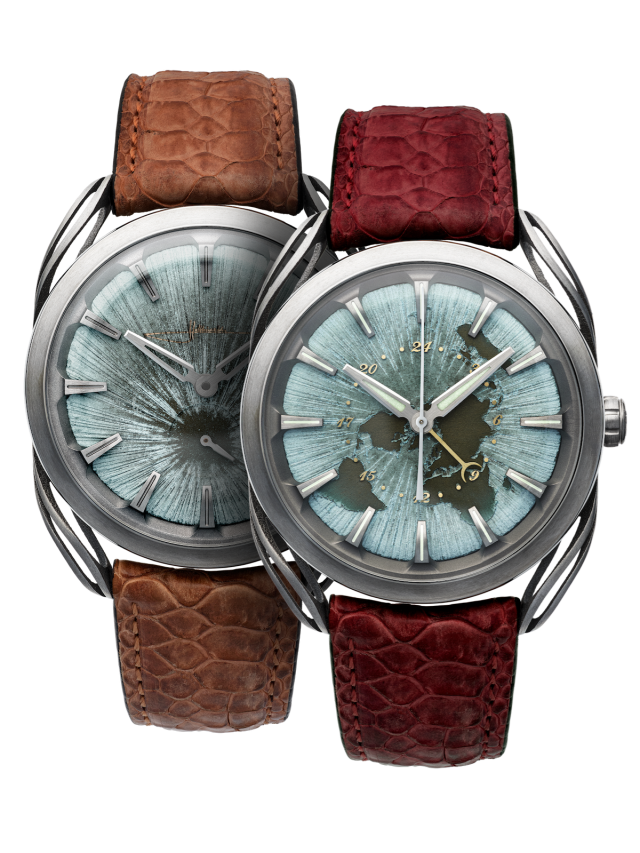
Material is placed intelligently rather than uniformly. Structural elements are engineered like miniature architecture, allowing unnecessary mass to disappear while rigidity remains intact. This enables cases that are slimmer and significantly lighter without feeling fragile. The visual complexity of the design contrasts with the effortless experience on the wrist.
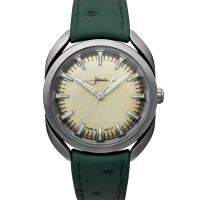
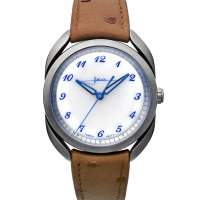
Customization is not limited to dial colors or engravings. Because the watch begins as a digital structure, geometry itself can evolve. Lug architecture, textures, proportions and structural details may be adapted for clients who seek something genuinely personal. The result is not a superficial variation, but a watch that reflects individual character at a deeper design level.
The visible texture of additively manufactured titanium is not unfinished. Surfaces are refined at a microscopic level, carefully balanced to achieve harmony between precision and material expression. Polished edges, brushed transitions and controlled micro-finishing coexist with the layered origin of the metal. The aim is perfection through nuance — allowing the watch to express both technological innovation and artisanal discipline.
Not entirely. The mechanical movement remains grounded in centuries of horological knowledge. Springs, gears and escapements function according to traditional principles. What evolves is the architecture surrounding the movement — the openness of the case, the way light interacts with layered forms and the relationship between structure and wearer.
It is more flexible, but not simpler. Each variation still requires engineering, prototyping and finishing. Additive manufacturing removes rigid tooling constraints, allowing exploration without rebuilding the entire production chain. Bespoke becomes a collaborative process — deliberate, precise and deeply considered.
Because independence values expression over repetition. Conventional manufacturing excels at scale and predictability. Architectural additive watchmaking embraces curiosity and individuality. The additional effort is intentional — a refusal to reduce luxury to standardized production.
Holthinrichs was among the first to fully commit to architectural additive manufacturing as a core philosophy rather than an experiment. Years of development have created a significant lead in both technical knowledge and design understanding. While more brands now explore 3D printing, many approach it cautiously — experimenting at the edges without fundamentally rethinking watch architecture. The leap required is substantial, and not everyone is willing to take it. Where others test the waters, Holthinrichs builds an entire design language around the medium. This commitment reflects a broader ambition: to challenge an industry that has grown comfortable with incremental change, and to prove that true luxury should not rely on mass-production or safe repetition.
It is not a replacement for tradition, but a parallel evolution. Classical watchmaking continues to refine heritage techniques, while architectural approaches explore new ideas around lightness, structure and personalization. Together they broaden the spectrum of mechanical watch design — allowing timepieces to exist somewhere between sculpture, engineering and personal expression.